
Systems Biology and Biotechnology
Study how the parts of mammalian cells work together as systems. Learn the experimental methods, network analysis and mathematical modeling used in systems biology research.
What you'll learn
- Describe experimental methods such as mRNA sequencing, proteomics and live-cell imaging, and how their data are analyzed.
- Apply network analysis and bioinformatics methods to systems biology and systems pharmacology data.
- Build mathematical models of cell signaling and the cell cycle in MATLAB.
- Analyze current research articles and write up a capstone project in a final report.
Skills you'll practice
- Bioinformatics
- Pharmacology
- Unsupervised Learning
- Scientific Methods
- Network Analysis
- Data Synthesis
- Mathematical Modeling
- Biochemistry
- Science and Research
- Experimentation
- Matlab
- Differential Equations
Course by course.
Finish all 6 courses to earn your certificate, in order and at your own pace. At 10 hours a week, they take about 2 months. Open a course to see what it covers.
- 1
Introduction to Systems Biology 19 hours
This course will introduce the student to contemporary Systems Biology focused on mammalian cells, their constituents and their functions. Biology is moving from molecular to modular. - 2
Experimental Methods in Systems Biology 20 hours
This course gives a broad overview of current experimental techniques in systems biology, such as mRNA sequencing, proteomics, cytometry and live-cell imaging, and how their data are analyzed. - 3
Network Analysis in Systems Biology 30 hours
This course introduces data analysis methods used in systems biology, bioinformatics, and systems pharmacology research. - 4
Dynamical Modeling Methods for Systems Biology 20 hours
Use MATLAB to model biological systems through cases such as cell signaling, the cell cycle and action potentials. Explore differential equation and stochastic models. - 5
Integrated Analysis in Systems Biology 4 hours
Read and analyze current research articles in systems biology. Study experimental design and reproducibility, and solve problem sets that build integrative skills. - 6
Systems Biology and Biotechnology Capstone 2 hours
Complete a capstone project that draws on the earlier systems biology courses, and write up your results in a final report.
Your certificates
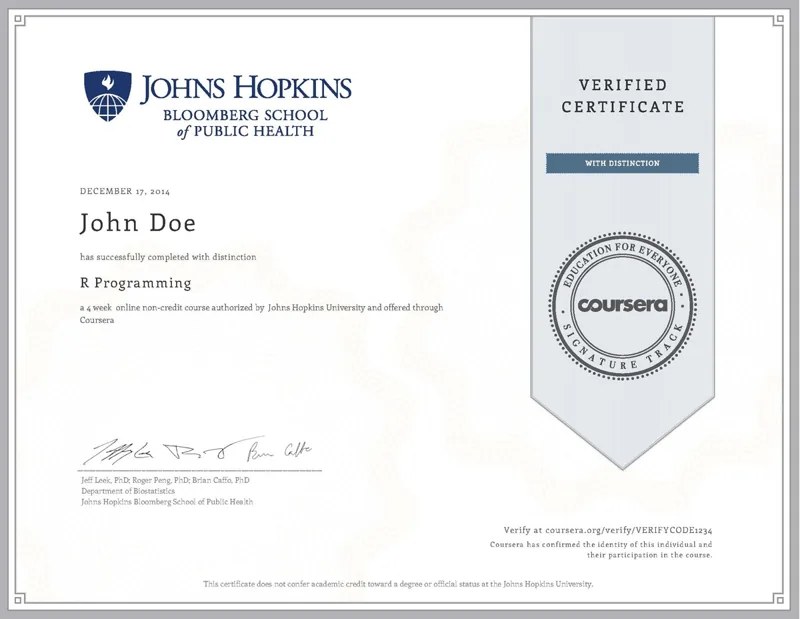
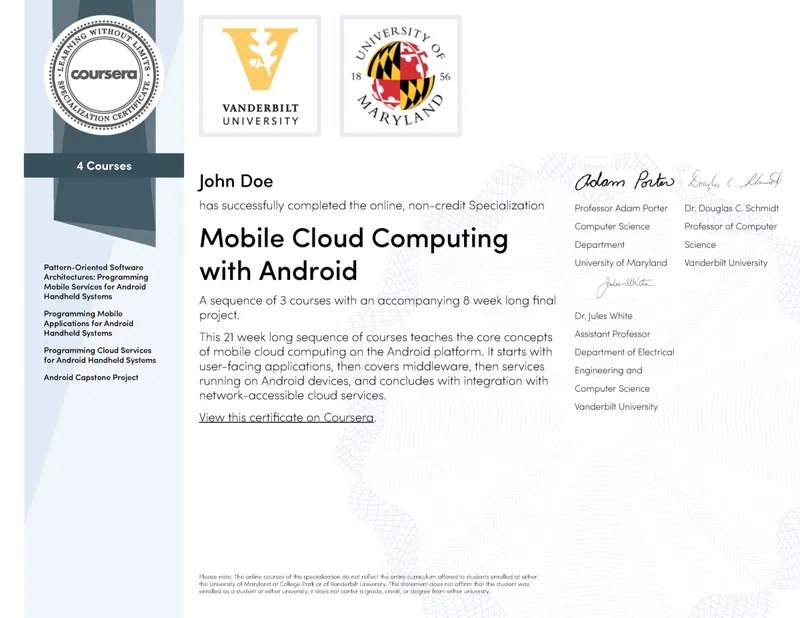
Sample certificates from our top providers. Yours shows your name, your course or program, and the partner that created it.
How it works
- Enroll and payPay once on the secure payment page, by debit or credit card (Visa or Mastercard).
- Activate your accessAccept the email invitation and start learning on Coursera. Your 6 months start then.
- Learn at your own paceVideos, readings and quizzes, on your phone or computer.
- Earn your certificatesOne for each course you finish, then the program certificate at the end. They are yours to keep.
Questions before you enroll
What happens when my 6 months end?
You keep your dashboard, your progress and every certificate you earned. Only your access to that program ends. To continue, renew access for another 6 months for $250.
Do I need experience to start?
Some background helps. This program expects you to know the basics of the field.
What language is it taught in?
English. Some programs also offer other languages you can choose from. Talk to our team to check the languages for this program.
Can I add the certificate to my CV?
Yes. Add it to your CV and share it on your LinkedIn profile.
Can I get a refund?
Yes, within 14 days of paying, if you have not activated your access yet. Read the refund policy.


Ready to start?
Enroll today, then begin whenever it suits you.